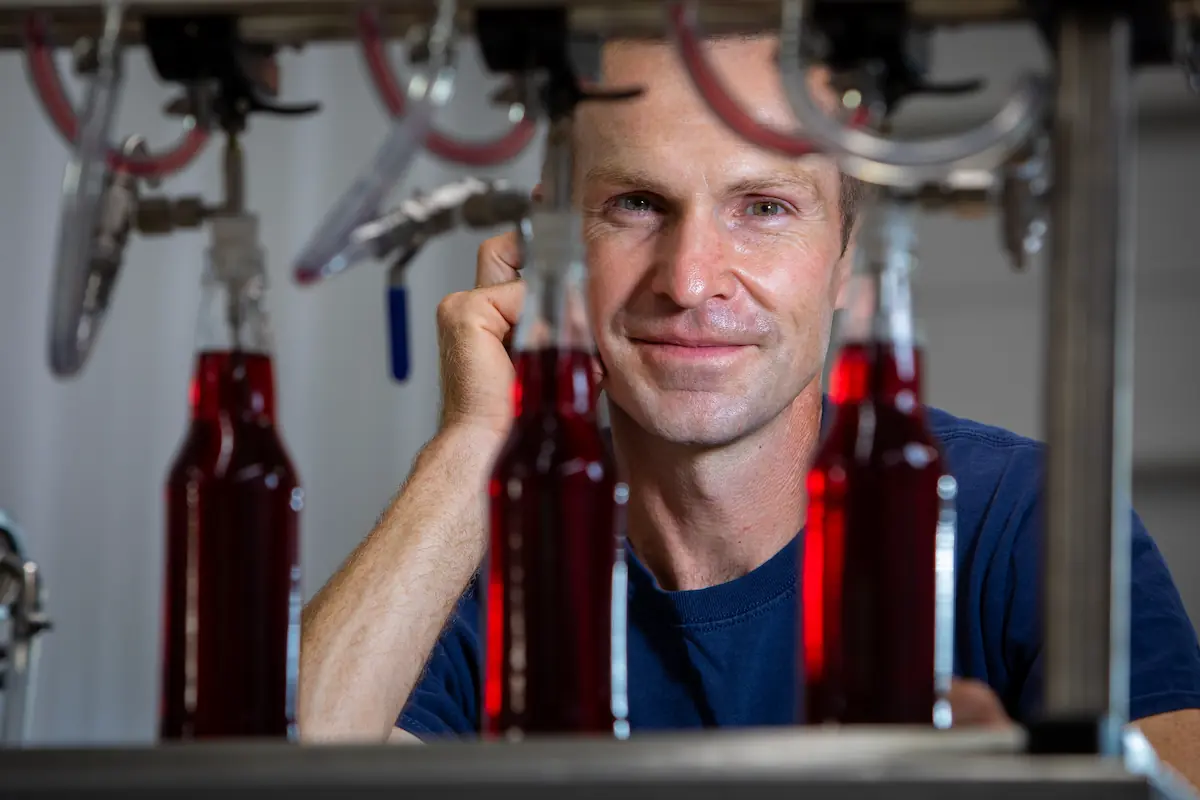
Six generations on this land. One new way to work it.
Before Matt Agle ever fermented a batch of soda, he was a farmer. What came after? The Army, the brewery, the years of trial and error only changed the tools. The land, and the family working it, stayed the same.
A farmer first, a brewer by trade.
Eden, New York has always produced farmers who build things. The grape-picking machines that dominate vineyards across the country today were invented here, by growers who saw a problem in their own fields and decided to solve it themselves. Matt Agle grew up inside that tradition, on land his family has worked for six generations, and he never really left it, even when the path away from the farm took him further than most.
He left Eden for university, and from there to Anheuser-Busch, where he spent his days learning the craft side of brewing: fermentation, carbonation, the chemistry of turning something simple into something that pours right. Then he joined the U.S. Army and served a combat tour in Afghanistan. It’s not the résumé you’d expect from a soda maker, but that’s Matt Agle for you.
When Matt came back to the family farm, he started experimenting almost immediately. “He wanted to take what the region already grew, Concord and Niagara grapes, plums, sour cherries, and turn the juice into something naturally carbonated, without the syrups and extracts that most sodas rely on. It took six years of small batches, failed brews, and slow adjustments in the fermentation process before the recipe finally worked the way he wanted it to.
What came out the other side is Agle’s Farmhouse Soda: four fruit-forward flavors, brewed on the same farm his family has tended for generations, using a process he built himself. It’s a small operation, run by hand, and every bottle still starts the same way, with fruit grown a short walk from where it’s fermented. Agle never stops tinkering with fruit flavors, like apple, quince, and strawberry, striving to perfect them for customers.
For Matt, the point was never to reinvent soda. It was to make one that actually tasted like where it came from and to give his family’s farm one more reason to keep going for a seventh generation.
Eden, NY has a long history of farmer-inventors. The grape-picking machines that dominate the industry today were invented right here. Matt Agle carries on that tradition of innovation, in four sparkling flavors of New York fruit.
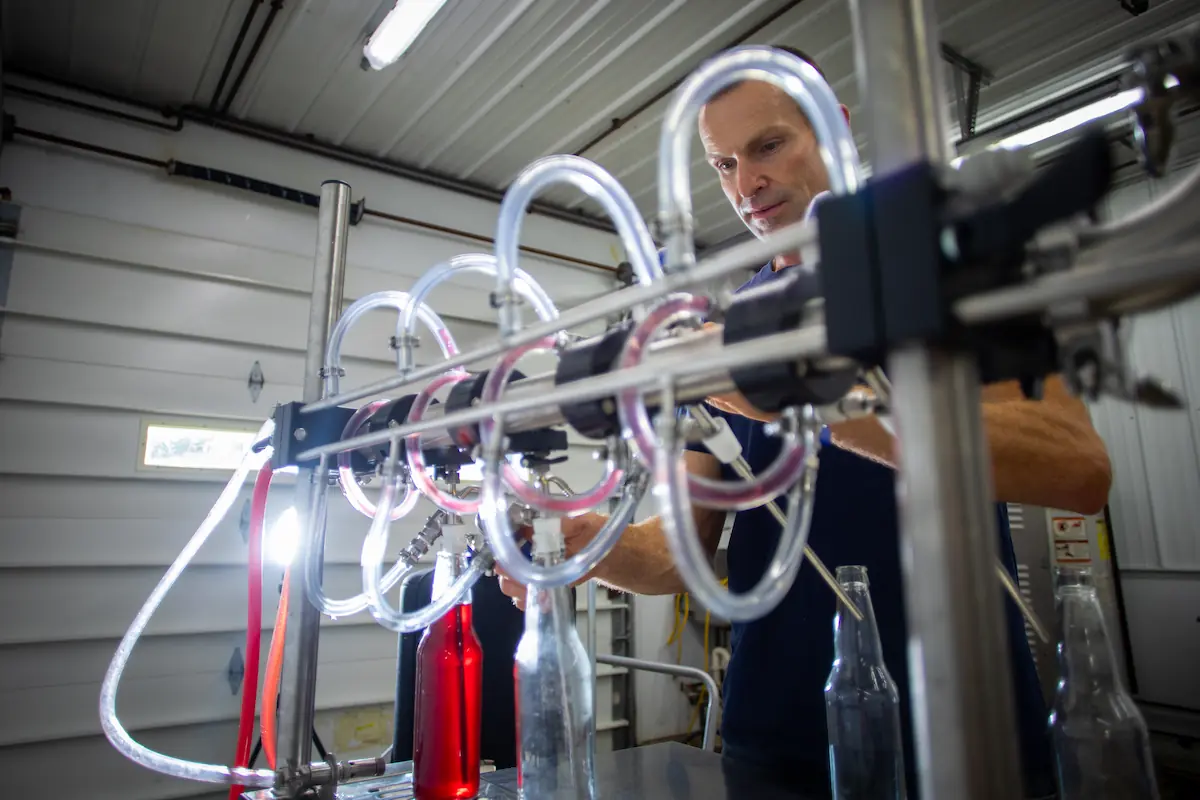
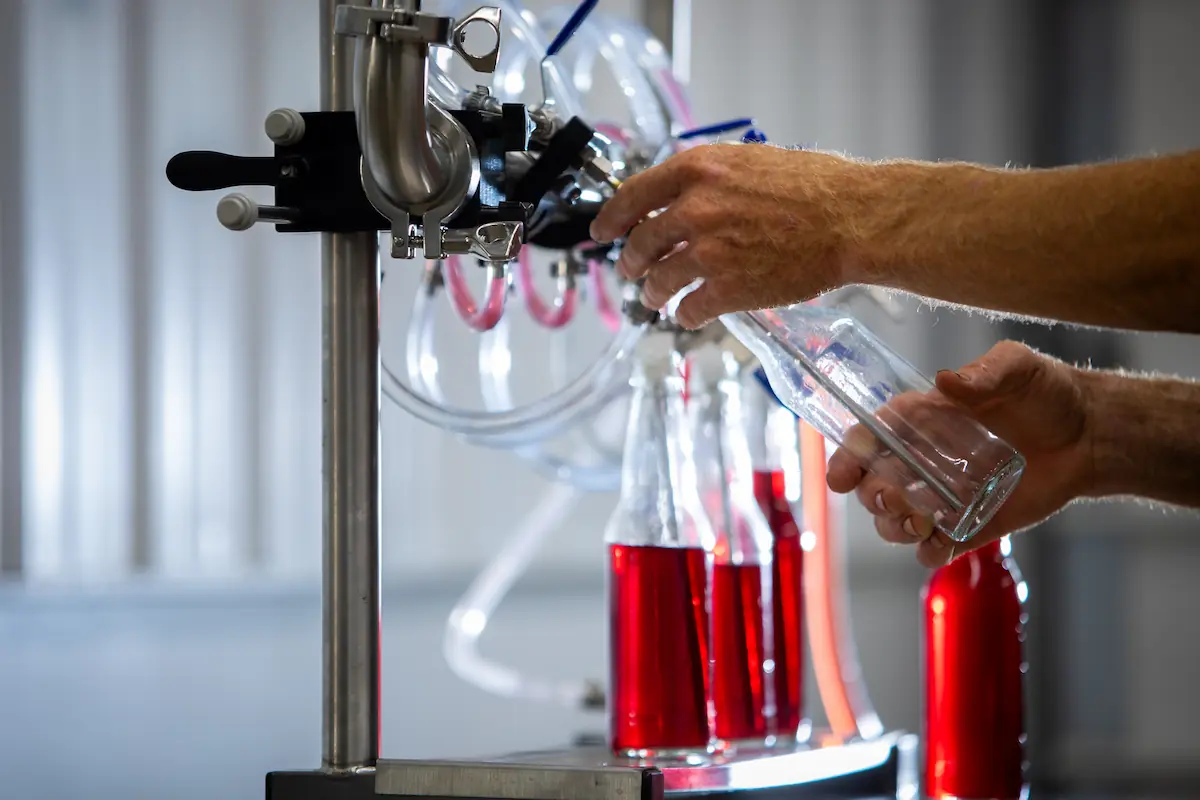
Every batch is fermented, bottled, and capped on the Agle family farm in Eden, the same fields the fruit is grown in.
Farmers who grow what goes in the bottle.
Agle’s Farmhouse Soda starts with real fruit from real orchards. These are the families who grow it.
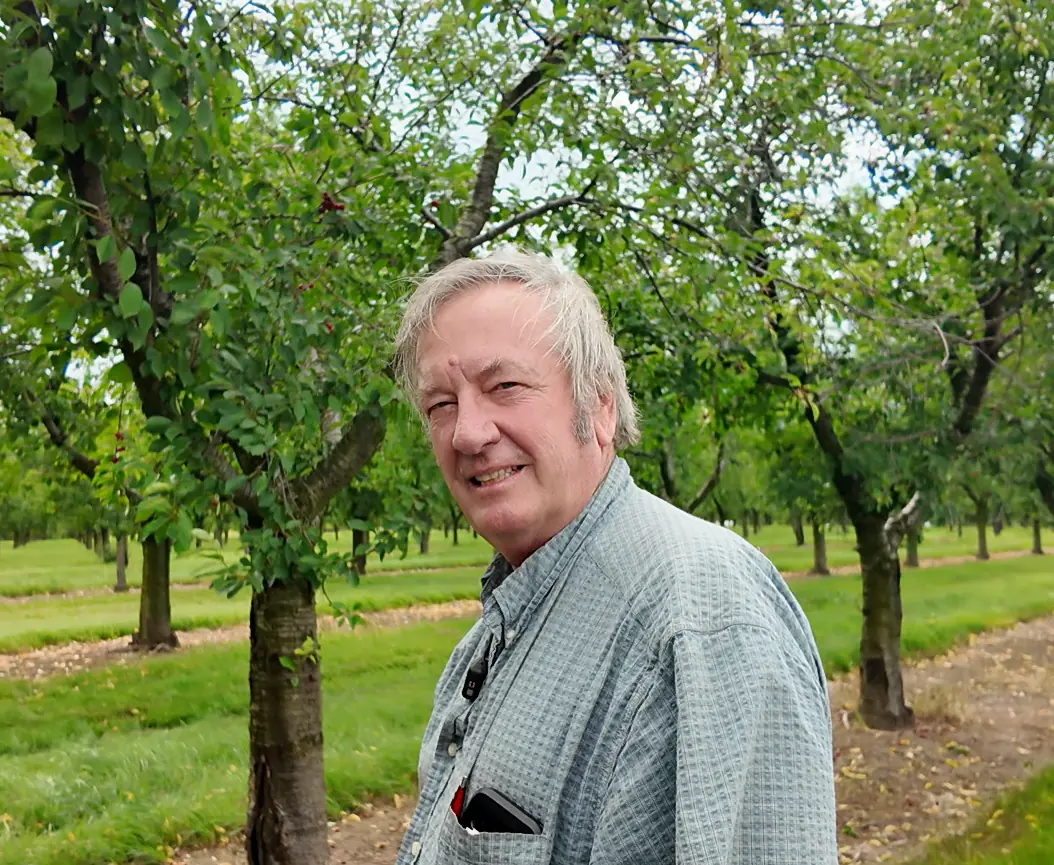
Jim Bittner
Sour Cherry Grower
Cherry orchards are vanishing from the well-drained soils along Lake Ontario. But 60 miles north of Eden, Jim Bittner and his crew at Bittner-Singer Orchards take care of the cherry trees whose fruit becomes Agle’s Farmhouse Soda. They prune, fertilize, and irrigate — prayers in motion for a good crop each year.
Springtime brings deer nibbling twigs and scraping antlers against tender bark. In summer, a single afternoon hailstorm can ruin the year’s crop. The financial uncertainty is a four-season problem.
Last year, Bittner’s Montmorency cherries were worth twenty cents a pound. This year, seventy. Break-even is about twenty-five — and it could be another eight or ten years before prices are that good again.
During harvest, a machine grips and shakes each tree while catcher fabric strung on poles snares the falling fruit. Conveyors funnel the cherries to a bin, where a worker’s hands fly to eject twigs and debris. At the Grower’s Co-op in Westfield, the fruit is steamed to pull color and flavor from the skin, then centrifuged to spin out the juice — concentrated down to 68 brix, all natural.
Montmorency cherries once went almost entirely into pie filling. Now most of the concentrate ends up in health food stores, pharmacies, and supermarkets — and some of it goes to wineries, distilleries, breweries, and Agle’s. Sour cherry soda won’t replace cherry pie, but it helps shore up the orchard’s bottom line. Depending on the year, every gallon of concentrate uses 65 to 70 pounds of Bittner-Singer Farms cherries.
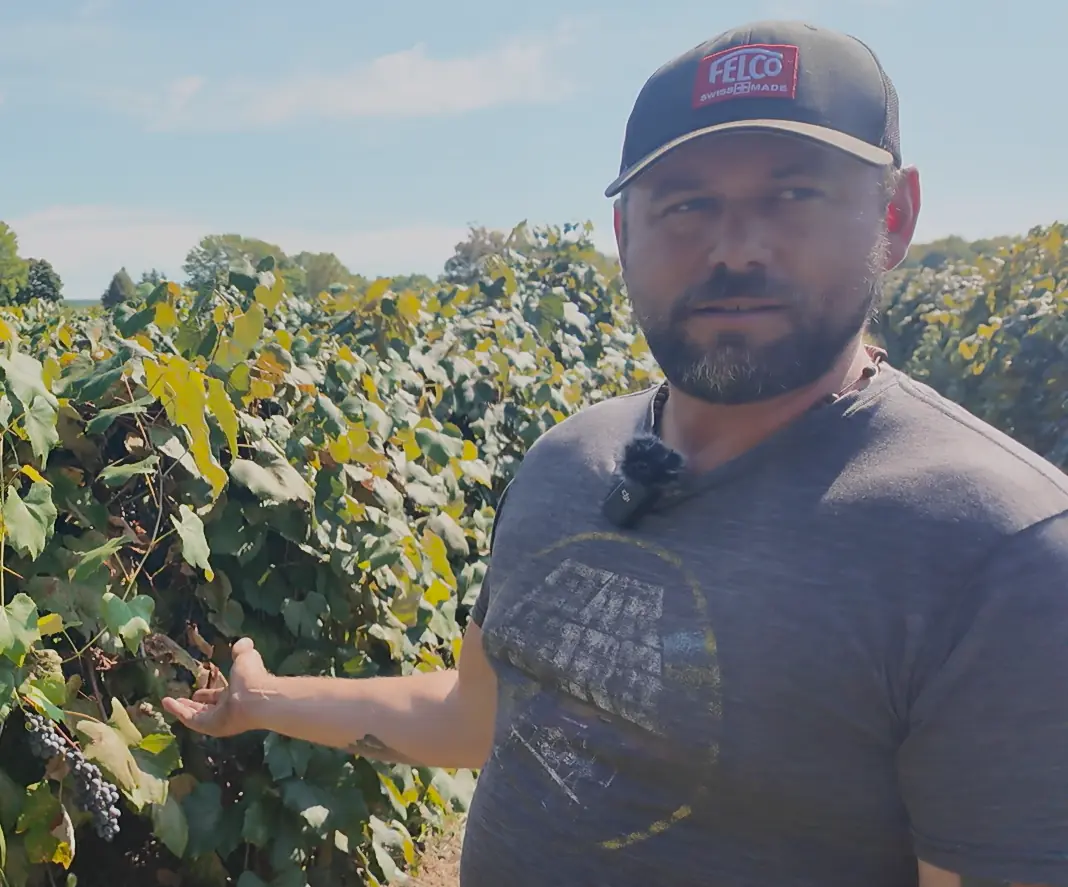
Colin Erdle
Concord Grape Grower
Roots are everything in grape country. When it’s time to harvest, Colin Erdle heads to vineyards bought for him to work before he was even born. “Everything that you can see up to the skyline used to be called the Verde Farm,” Erdle said, as workers clipped and cleaned bunches of Concords, placing them in a crate wheeled between the rows. “They were raising horses for the Union Army in their heyday. When cars came along, they switched to grapes. That’s how old these vines can be.”
Since the 1850s, Chautauqua County farmers have cultivated Concord grapes, and six generations of the Erdle family have worked the same vines for a century — vines whose DNA maps back to the original Concords developed in 1849 in Concord, Massachusetts by Ephraim Wales Bull.
Each year, Erdle and his crew groom the vines, pruning every runner down to the right number of buds, digging posts and winching steel cable hundreds of feet to keep grape clusters at the right height for picking. They fertilize, weed, spray, and hope hail doesn’t ruin the year’s return, stringing netting against deer and turkey. Rain can make harvest miserable, but the grapes set the schedule — sugar content decides their price, and every day of delay once they peak is money lost.
After a childhood spent tending vines, Erdle decided he wanted to be a musician instead. He studied music at Fredonia and taught in Cleveland and Buffalo Public Schools — then came back to the farm. The work suits him: the physical labor, and the independence to follow his own compass. Each year he sends about two tons of hand-picked Concords to Buffalo Public Schools. “So I’m feeding the children of the students that I used to teach,” he said.
When Matt Agle told him about making fruit soda, Erdle said he’d help. It won’t solve every problem fruit farmers face — but any way to bring in more year-round income in a seasonal business, he said, surely helps.
The farm, in motion.
Two short films on how Agle’s Farmhouse Soda gets made, from the orchard to the bottle.
Follow along on the farm.
New batches, harvest updates, and where to find us next.